Monday, September 21, 2026

History of Slavery

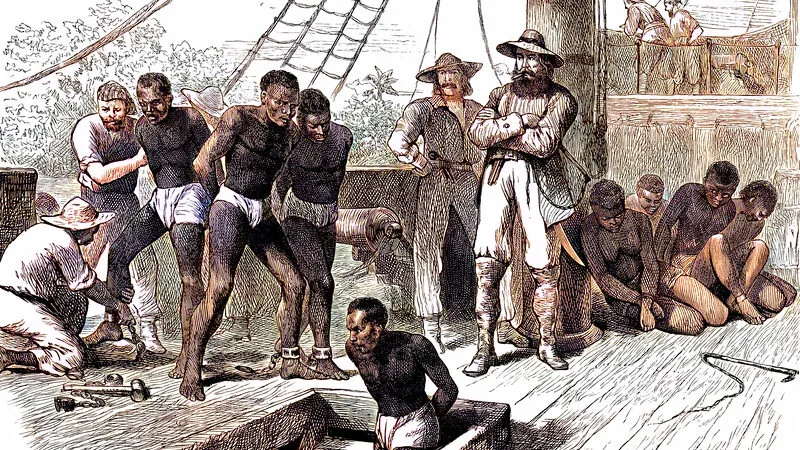
Before the American Civil War, slavery was one of the most debated issues in the United States. While abolitionists argued that slavery was morally wrong and should be ended, many Southern politicians, planters, and public figures defended the institution. Understanding their arguments helps explain the deep divisions that existed within the nation during the nineteenth century.
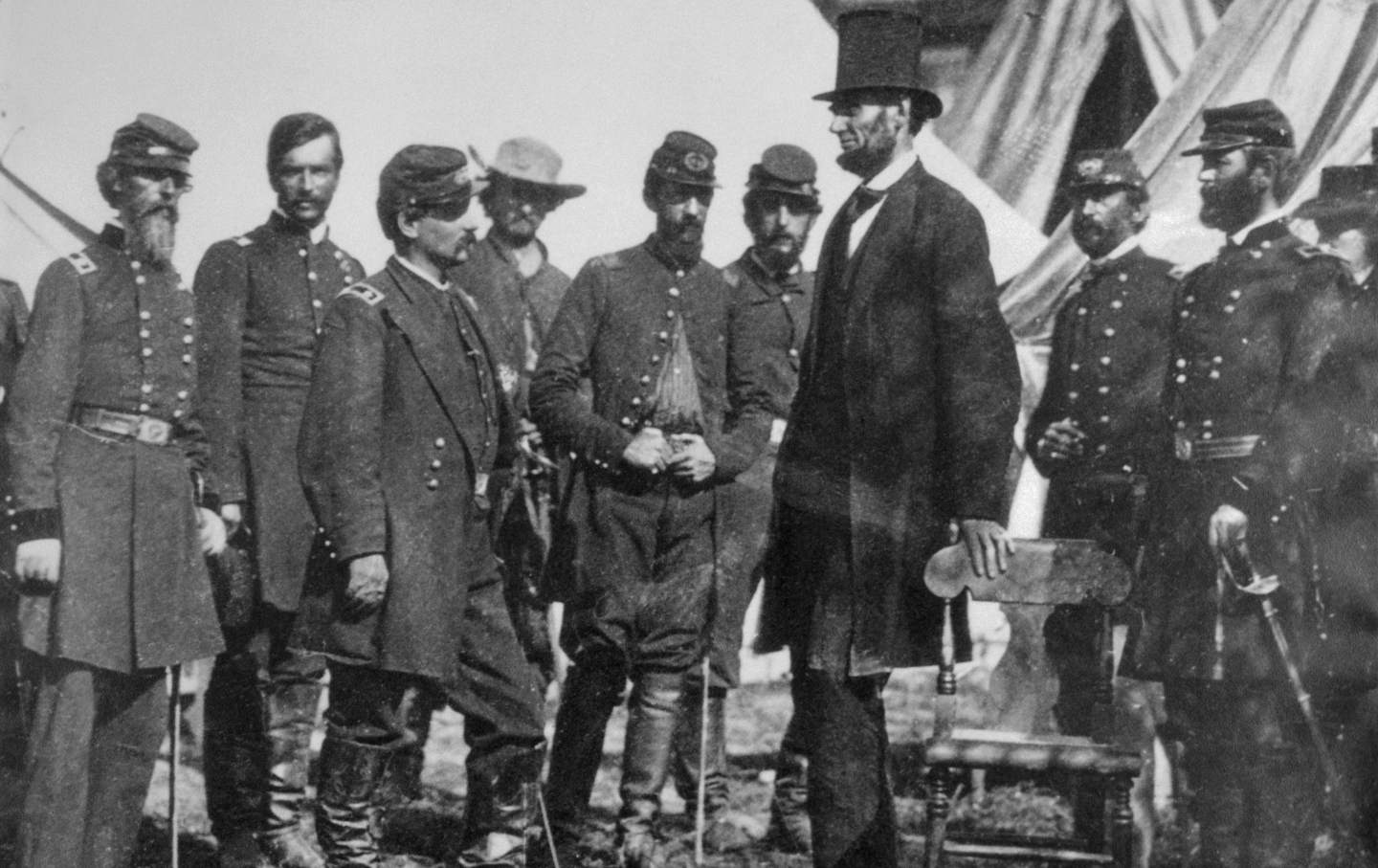
Civil War Isn't on the Horizon—the Original Battle Never Ended | The Nation

One of the most common arguments centered on history and tradition. Defenders of slavery frequently pointed out that slavery had existed for thousands of years. They noted that ancient civilizations such as Greece and Rome relied on enslaved labor and that slavery could also be found throughout Europe, Africa, Asia, and the Americas at various points in history.

Because slavery had been a part of human societies for so long, supporters questioned why it should suddenly be abolished. To them, its long history was evidence that it was a normal and accepted institution.

Economic concerns formed another major part of the defense of slavery. Southern agriculture depended heavily on crops such as cotton, tobacco, rice, and sugar. These products generated enormous wealth for plantation owners and contributed significantly to the American economy. 

Supporters argued that enslaved labor made this agricultural system possible. They claimed that a sudden transition to free labor would disrupt production, harm businesses, and create economic uncertainty across the South. Many believed that eliminating slavery would threaten the prosperity upon which Southern society depended.

Defenders also stressed the difficulty of changing a long-established system. By the mid-nineteenth century, slavery had been embedded in the Southern economy and social structure for generations. Supporters argued that replacing it would not be simple and questioned whether the region could function effectively without it. Rather than focusing on the moral question of slavery, they emphasized the practical challenges that they believed would result from abolition.

Legal arguments were equally important. Defenders of slavery often pointed to the Constitution and other laws that recognized and protected slavery in certain circumstances. They argued that the nation's founders had allowed slavery to exist and that individual states had the right to determine their own policies regarding the institution. From this perspective, slavery was viewed not only as a social and economic system but also as one supported by existing law.

Another argument commonly made by slaveholders was paternalism. Supporters claimed that enslaved people benefited from the care provided by their owners, including food, clothing, shelter, and supervision. They often described the relationship as mutually beneficial and insisted that enslaved people were better off under this system than they would be living independently. Historians today recognize that such claims ignored the realities of forced labor, lack of freedom, and the physical and emotional suffering experienced by enslaved people.

Ultimately, the debate over slavery reflected a conflict between competing visions of society. While defenders emphasized tradition, economic stability, legal protections, and paternalistic ideas, abolitionists argued that human liberty and equality were fundamental rights. Examining these historical arguments provides insight into the attitudes and beliefs that shaped one of the most significant conflicts in American history. 

This blog post was created with the assistance of artificial intelligence (AI). AI tools were used to help with research, drafting, and/or editing. 

Sunday, September 20, 2026

I thought about the presentations

In class when everyone was presenting their information from the past, I was taking it back a lot because I was surprised how much information I didn't know. I did know a little bit about some of the information that was presented like how the slave trade worked I did have a understanding of that. Also, I did know a little bit about John Brown and what he stood for during his time in the 1800s.

But of course to learn something new every day. Like I said before I knew some things about John Brown but I didn't know everything and I still learned a lot from the presentations. Also if I'm being honest, personally, John Brown was my favorite part of all the information that was given that day. 

What I learned from the presentations was, he was born in Connecticut and was raised in a strict anti-slavery household. I knew he was against slavery, but I didn't know how his family was to slavery. I learned of his actions in this presentation too how he became involved in a violent conflict in Kansas during 1855. 

I guess the reason why this is my favorite part of the presentation is because one I knew a little bit about the topic into John Brown, as a person has a very long lasting legacy that stood out to me because it's hard to create a legacy that lasts that long, and his actions really sparked anti-slavery move mince throughout the country after his execution by the country.

Speaking of his execution, that's another thing I didn't know about him. I originally thought he would've died from old age, but no, he died from his actions, even though his actions were for the better of the country. 

I have to say his actions that I learned about very noble, trying to start an uprising in Virginia for the slaves, of course, with the help of 21 other men. After learning how he was execute, I wish you could've seen what the country would've become without slavery.

Of course, I did enjoy the other topics that were brought up in the presentations like the Civil War, the start of women's rights, the battle fought, Missouri joined the union, talking about Abraham Lincoln a little bit, how some of the enslave people got to go back home etc. But I think the most important in the most impactful out of all the topics is of course the Civil War. Because let's face the facts this was quite the turning point for the country.

Civil War really brought to light the evil atrocities that our country was doing. Of course I can't forget about all of the death in his destruction the Civil War caused. But luckily, after the war, the country saw what he was doing wrong and changed for the better.

I think everyone did a great job on what they presented but the Civil War I think they did an outstanding job. The way they worded it, how they organized it, and how they present all of it was very inspiring, and has taught me a thing or two on how to present better funny enough. The only thing I think they could of done better is add a bit more color and pizzazz to their slides. After they finished everything in their topics, I realized it was just a lot of paragraphs and bullet points, if they had more pictures or gave it some effects that would've made it perfect in the end. 

_____________________________________________________________________________________

AI Disclosure: AI was not used in anyway during the creation of the blog post 

William Wilberforce Highlights

William Wilberforce - Wikipedia

Many people throughout history have fought to make the world a better place. One of the most important figures in the fight against slavery was William Wilberforce, a British politician and abolitionist who dedicated much of his life to ending the transatlantic slave trade.

William Wilberforce was born in England in 1759. He entered Parliament at the age of 21 and quickly became involved in politics. Although he came from a wealthy background, his life changed when he learned more about the cruel realities of slavery and the slave trade.

During the eighteenth century, millions of Africans were captured and transported across the Atlantic Ocean to work as enslaved laborers. The journey was often deadly, and those who survived faced harsh and inhumane treatment. The slave trade generated large profits for many British merchants, making it difficult to challenge.

After experiencing a religious conversion in the 1780s, Wilberforce became committed to improving society and helping those who suffered injustice. He began working with abolitionists, including Thomas Clarkson, who had gathered evidence about the terrible conditions endured by enslaved people. Together, they sought to persuade both the public and Parliament that the slave trade should end.

One of Wilberforce's greatest strengths was his persistence. In 1789, he delivered an important speech to Parliament explaining why the slave trade was morally wrong. Over the next two decades, he repeatedly introduced bills and argued in favor of abolition. Many politicians opposed his efforts because they believed slavery was necessary for Britain's economy.

Wilberforce's Determination  

Despite these setbacks, Wilberforce refused to give up. Year after year, he continued campaigning against the slave trade. His determination inspired many others to support the abolitionist movement. Public opinion gradually began to change as more people learned about the suffering caused by slavery

After nearly twenty years of effort, a major victory finally came in 1807. Parliament passed the Slave Trade Act, making it illegal for Britain to participate in the transatlantic slave trade. This was a historic achievement and a significant step toward ending slavery.

However, Wilberforce understood that the fight was not over. Although the slave trade had been abolished, slavery still existed throughout much of the British Empire. He continued supporting campaigns aimed at ending slavery completely.

Later in his Life 

In his later years, Wilberforce witnessed growing support for full emancipation. Just before his death in 1833, he learned that Parliament was preparing legislation to abolish slavery across most of the British Empire. This law, known as the Slavery Abolition Act 1833, was passed shortly afterward.

Today, William Wilberforce is remembered for his determination, courage, and commitment to justice. His efforts helped change British society and demonstrated how one individual can help bring about meaningful change. His story remains an important example of perseverance and the fight for human rights.


_____________________________________________________________________________________

AI Disclosure: This article was written with the assistance of artificial intelligence (AI). AI tools were used to support research.

Thursday, September 10, 2026

The 8 values of Expression

Individual Self-Fulfillment is one of the eight values of freedom expression and personally I think it is the most important among all of the eight values. This value pacifically is directed and describes us as individuals. It shows us our core values and is essential to us because without it we lose what makes us different than other people.
Sociology: Misrecognizing minorities | Nature Human Behaviour
This thoroughly describes us because in our country democracy is all around us, in every state and in every city, this value shows our will to express, our opinions and feelings. A prime example of expressing yourself in today's world is on social media. Sure not all social media is good, if anything, lots of social media can have bad effect on you, but in this case this is a good place to show your opinion and see how confident speaking to everyone. 

But that is only the tip of the iceberg there is more to this value than meets the eye. 

There's more to this value than just public speaking, or expressing yourself. This value also talks about discovering who we are as an individual in society. Finding self peace is a good way of describing it.

The Art of Solitude: Why Being Alone Can Improve Your Life | Humans
Finding inner peace is essential to living a happy life

But in the world we live in that is very hard, reason being is all the complications in life. In life, things are constantly changing, and we, as people have to adapt to life for the better.

Which makes this value all the more important because in a world of constant media, change, and diversity you must find yourself so you don't get lost in the world. Think of it, kinda like this the world is one big puzzle, you may not always agree with the world, but it's a good idea to find where you fit in that puzzle, and that's the good thing about puzzles not every piece is the same your unique in your own way. 

Download Puzzle Piece Fitting Image - Puzzle, Strategy, Concentration |  StockCake  Seeing where you fit in the puzzle can also bring you lots of benefits like making connection with other people, and bonding with other people can also tie into the other parts of value, like expressing your opinion. 

Having other people with you can really strengthen your confidence to speak to an audience, and to spread the word of your opinion at the same time to others in the world. 
                                                                                                                                Want to Learn How to Be Better at Public Speaking?

In the end Individual Self-Fulfillment can be summed up in a few different ways. First way is properly expressing your opinion to people, and those people can be anybody in the world, politics, your friends family, strangers, anybody. 

The second is finding inner happiness or inner peace as some people might say. This is the most important part of the value in my personal opinion because you can't live your life in sadness, anger or in confusion you must find happiness in your life, that is the most healthiest way you can live your life. In short the easiest way to describe this is accomplishing your goals, finding out who you are as a person, and expressing yourself to any in all audiences in the world.
_____________________________________________________________________________________

AI Disclosure: AI was not used in anyway during the creation of the blog post 

Tuesday, September 8, 2026

What Religion Says About Slavery

Through the history and documentation of many religions, we can see that their views on slavery differ, and also fluctuate throughout time. The question here, however, is what differences and arguments are there throughout all these religions in the aspect of pro versus anti slavery. This question is rich with answers on both sides across numerous religions.

The Emancipation Proclamation: the first step towards the end of slavery in  the US | U.S. | EL PAÍS English

Arguments Against Slavery

For most of the Old Testament, the Bible doesn’t exactly say that slavery is right, but it acknowledges that it was a sort of “Social Construct” at the time that was widely used and accepted. Specific religions, like Judaism, for a time in its early days, condoned slavery as a normal practice, especially the enslavement of non-Isrealites. 

However, as time went on, they started to legalize certain forms of slavery that they deemed were against Judaism or Christian beliefs. After more time passed, they eventually put the illegalization of slavery in full effect with little to no exceptions. So the argument here would be that at the start, most religions were all for slavery, until they realized it went against exactly what they preached, so they decided to crack down on it. 

One big part of the Bible that details this is the book of Exodus, especially verse 21:2. This verse details one of the laws put into place about servitude, that you can have someone serve you for six years, but on the seventh, they MUST let you go free. This is mostly because in Judaism, “slavery” leaned more towards indentured servitude, meaning they would go free after serving a certain stretch of time. 

The Economics of Slavery - WSJ

One other place in the Bible is Galatians 5:1, which helps reinforce how slavery was a lot less harsh and less practiced as it was in the Old Testament. The verse says, “It is for freedom that Christ has set us free. Stand firm, then, and do not let yourselves be burdened again by the yoke of slavery.” (Galatians 5:1 NIV). This is showing the belief that no man should ever have to serve permanently or, more specifically, from birth or a very young age, until death, whether that be from old age or from being worked to death. 

So in biblical times slavery was never fully illegal per se; however, especially in the New Testament, it mentions that it was very inhumane and was effected majorly by these new rules, making it a lot better. While, of course, slavery was never intrinsically good, this new form of servitude did serve as a big argument against harsh slavery. 

This was also reflected in more modern times during the abolition of slavery, when the government had to make a number of exceptions to get people to finally agree with the new laws, even if that meant still leaving a major amount of injustice on society.

Connecting Slavery Then with Slavery Now: Part 1 - End Slavery Now

Arguments for pro slavery 

The Bible says that slavery is permitted in the old world. For example in the old world Moses comes up a bit when discussing this topic. According to Moses's law Hebrew servants were allowed to work for 6 years to repay any and all of their debts but in the seventh year they were supposed to be set free.  

But they had to be released after their six years were up, no expectations unless they had more debts. There are also quotes from Christianity that support slavery like, Leviticus 25:39–40 says these “slaves” were to be treated as “a hired man, as if he were a sojourner.” Verse 43 says, “You shall not rule over him with severity.” 

From what I can tell so far Christianity did not use slavery the same way as people from the 1800s, instead they almost used it in a nicer way. But speaking about the 1800s the bible was actually used to fight for pro slavery in that time.  

Is there a case for slavery reparations? | Psephizo

The Jewish religion says a similar thing about slavery, the religion says that slavery is ok to a certain extent. From what I can tell it is more seeing people as workers than as slaves, so like Christianity they use slavery in a nicer way than the 1800s stereotype we commonly use. In fact there is even a law in place that prevents them from making people slaves; “no Israelite is permitted to enslave a fellow Israelite who is indigent.” Website information       

In the end you could say that the two religions I talked about earlier never really enforced slavery. The two religions were more in a weird gray area of sorts, not heavily supporting but then at again, they were not trying to ban or get rid of it in any means. So when you are comparing the 1800s to the old world, the time when the world was more heavily focused on religion, remember that they are different. Not different in the sense of calling it red vs blue but more of saying gray vs black, similar in some ways but at the end not the same.  

History of Slavery

Before the American Civil War, slavery was one of the most debated issues in the United States. While abolitionists argued that slavery was ...