Monday, November 2, 2026

Reaction about today's class

Today during everyone's presentations I learned a lot about the time frame. What a normal day looked like in the 1800s, and the discrimination and racism that took place in century. Honestly, the more I learned about how things were in the 1800s the more heartbroken I became and it was very sad to see how terrible this time was for people. 

I mean the story about how a black person with really light skin was arrested for just buying an ordinary ticket for a train is just baffling and crazy to me. 

Although I can't talk about the presentations without discussing how the people who are giving them did. For the most part, I think people were very organized and put a lot of work into this. 

But there is one thing I am a little disappointed about. I wouldn't say everyone did this, but I'd say a big chunk of people didn't really speak confidently or loud enough in my opinion.

I think if people spoke up a bit more in their presentations, I think everybody would've been perfect. Of course don't give me wrong.

Everybody gets nervous and then that causes them to stutter but I don't think there is anything wrong with that. I even stutter sometimes when I present; in the end it happens to everyone

There is one thing that caught my eye in this and that was how much we used out imagination during this. The presenters did use images but not all of them did, but even the people who didn't use images to back their claims up, they worded it so carefully and with lots of detail, I might add; that it wasn't hard at all to picture what some of the scenarios would look like. 

Lastly my final opinion about this is, everybody did a great job. It was obvious that everybody rehearsed and looked up all the information they needed for this. Also most of all the presenters didn't let their fear or nervousness control them in the end. But like I said the only thing I think that people could improve on is how loud they talk.

No AI of any kind was used in the creation of this blog post.

Saturday, October 31, 2026

Reconstruction video reaction

In the reconstruction video it brought to light some things and events that most people probably don't know about. It showed us what life was like for Black people after the Civil War. From what the video told us life was very hard and violent for people in New Orleans.

Black communities in New Orleans were frequently attacked by white mops, and at least 48 people died from these attack attacks. 


Luckily some actions were taken to try to right these wrongs, the survivors of these attacks like Lucy Tibbs  testified to Congress despite the risk of future violence against black people. 

During the 1800s specifically June 1866 the 14th Amendment became very important, establishing a birthright to citizenship in the country. It goes like this, if you were born in the country then the state cannot deny any person due process or equal protection of any laws.

The 14th amendment also forced southern states to allow black men to vote in the country and hold office.

It's also important to know that a year later in 1867 congress divided the former confederacy  into five military districts, which were then overseen by US generals. 

But this wasn't the only important thing that happened in 1867, during this year activists and army officers registered black voters across the south. The share of black men nationwide who could vote, rose from being under 1% at the start of the year to more than 80% by the end of the year. 

Although a lot of people were against black people in the aftermath of the Civil War, some people were actually fighting with them in a way. For instance, poor farmers sided with them because they both wanted the same thing, better conditions for farmers and both races. 

Personally, I think this video is a very good look to see how history treats change in the country. Obviously not everybody likes change, but either way change is usually for the best and in this case, it is definitely for the best.

AI was uses to in this but only as a guide to form the outline

Thursday, October 22, 2026

The Rise of The KKK

The Ku Klux Klan, or better known as the KKK, was a white supremacist organization that developed in the American South after the Civil War. The original Klan was organized by former Confederate veterans in Pulaski, Tennessee, in 1866. It began as a social club but soon became a way for white Southerners to resist Reconstruction and attempt to restore white supremacy. 

The KKK and Reconstruction

After the Civil War, the United States entered the period known as Reconstruction. Formerly enslaved African Americans were gaining freedoms and political rights that they had previously been denied. The KKK strongly opposed these changes. 

Cross Burning | The First Amendment Encyclopedia

The organization used intimidation and violence against Black Americans and white supporters of Reconstruction. According to Encyclopedia Britannica, Klan members carried out nighttime raids in which they whipped and killed formerly enslaved people and their white supporters. Their goal was to restore white supremacy and resist the political changes taking place in the South. 

Violence and Voting

One important part of Reconstruction was the expansion of political rights for African Americans. The KKK attempted to prevent Black Americans from exercising these rights through threats and violence.

The violence became especially serious around elections. History describes Klan attacks against Black Americans and white Republicans that included intimidation, destruction of property, assault, and murder. These actions were used in an effort to influence elections and resist the political changes of Reconstruction. 

The Government Responds

The federal government eventually took stronger steps to stop Klan violence. In 1871, Congress passed the Ku Klux Klan Act. The law made it a federal crime to deny people constitutional rights and gave President Ulysses S. Grant additional powers to combat organizations using violence and intimidation. 

Federal authorities used these powers against the Klan. In South Carolina, troops made arrests, and trials resulted in hundreds of convictions or guilty pleas. These actions helped weaken the organization. 

Ku Klux Klan: Origin, Members & Facts | HISTORY

Why the First KKK is important in this matter 

The original KKK declined during the 1870s, but its history shows how violently some Americans resisted the expansion of rights for African Americans after slavery. 

Studying the first KKK is important because it helps explain the challenges of Reconstruction. African Americans gained new freedoms and political rights following the Civil War, but organizations such as the KKK attempted to take those rights away through fear, intimidation, and violence.

AI Disclosure: Artificial intelligence was used to assist with the organization, wording, and summarization of this blog post. Microsoft Copilot helped turn information from the listed sources into a clear format for this assignment.

Tuesday, October 20, 2026

Reflection of Gone with The Wind Movie

Gone with the wind has quite the interesting take on the time the civil war took place. The story itself follows a very wealthy young women named Scarlett O'Hara. In the story we see how differently the 1800s are compared to things now a days. 

How different the culture is, how the state are with each other, how black people are treated, what technology they had back then, what the country looked like and so much more. 

One thing I thing the movie could improve on is it's take on slavery. In the 3 hour long movie it has a weird take on slavery, it shows slaves as being part of the family and for the most part shows them equal to everyone else. 

In my humble opinion I feel like the movie does a really bad job at depicting slavery. It is showing slavery like it is a fantasy or something, basically it really only shows how racists people view slavery. It by no means shows the reality of slavery. 

For the most part the movie is focused around the main character Scarlett O'Hara trying to find love/husband. She does eventually find a partner but he dies half way into the movie. Then she becomes interested in someone else. His name is Rhett at first he is shown as a humble and mysterious character, but later in the story he becomes a great help to her. 

Scarlet and Rhett first meet at Scarlett's house during a big party. Their first real interaction was a little rocky to say at least. She almost injured him with a glass, the reason why she did that is because she just had an argument, and she was letting out her anger by throwing a class at the wall. 

But even after that, Rocky start between the two of them, they still got along. Which surprised me at first because I thought this would've had a bad impression on Rhett. Even though that Scarlett apologized to him.

Because he is the main reason she and her friends survive. Right before Rhett helps her she is trying to deliver Melanie's baby amidst a burning city, thanks to the civil war happing of course. 

However, even emits the chaos of the Civil War and the town burning down around them they were still able to escape the chaos, and then they began to make their way back to Tara. But before they get back to Tara Rhett decides to leave them on their own. He says goodbye to them as he walks away to join the army for the war.

Gone With the Wind' sweeping back into cinemas | Times Leader Archive

After that, finally after a long and enduring trip Scarlet comes home to her family's plantation and finds out that her mother has died and the house and land around it are in ruins. But luckily, her father is still alive, but he is very traumatized from the events that took place there; and that is how the story ends with her home destroyed. 

If I'm being honest, I don't think this is my favorite movie, but I do see where it succeeded in some areas. Speaking about succeeding I personally think the reason why this movie was such a hit was because it came out not too long after the second world war and since this is about the Civil War, I think it hit the audience pretty good.

Monday, September 21, 2026

History of Slavery Trial

Before the American Civil War, slavery was one of the most debated issues in the United States. While abolitionists argued that slavery was morally wrong and should be ended, many Southern politicians, planters, and public figures defended the institution. Understanding their arguments helps explain the deep divisions that existed within the nation during the nineteenth century.
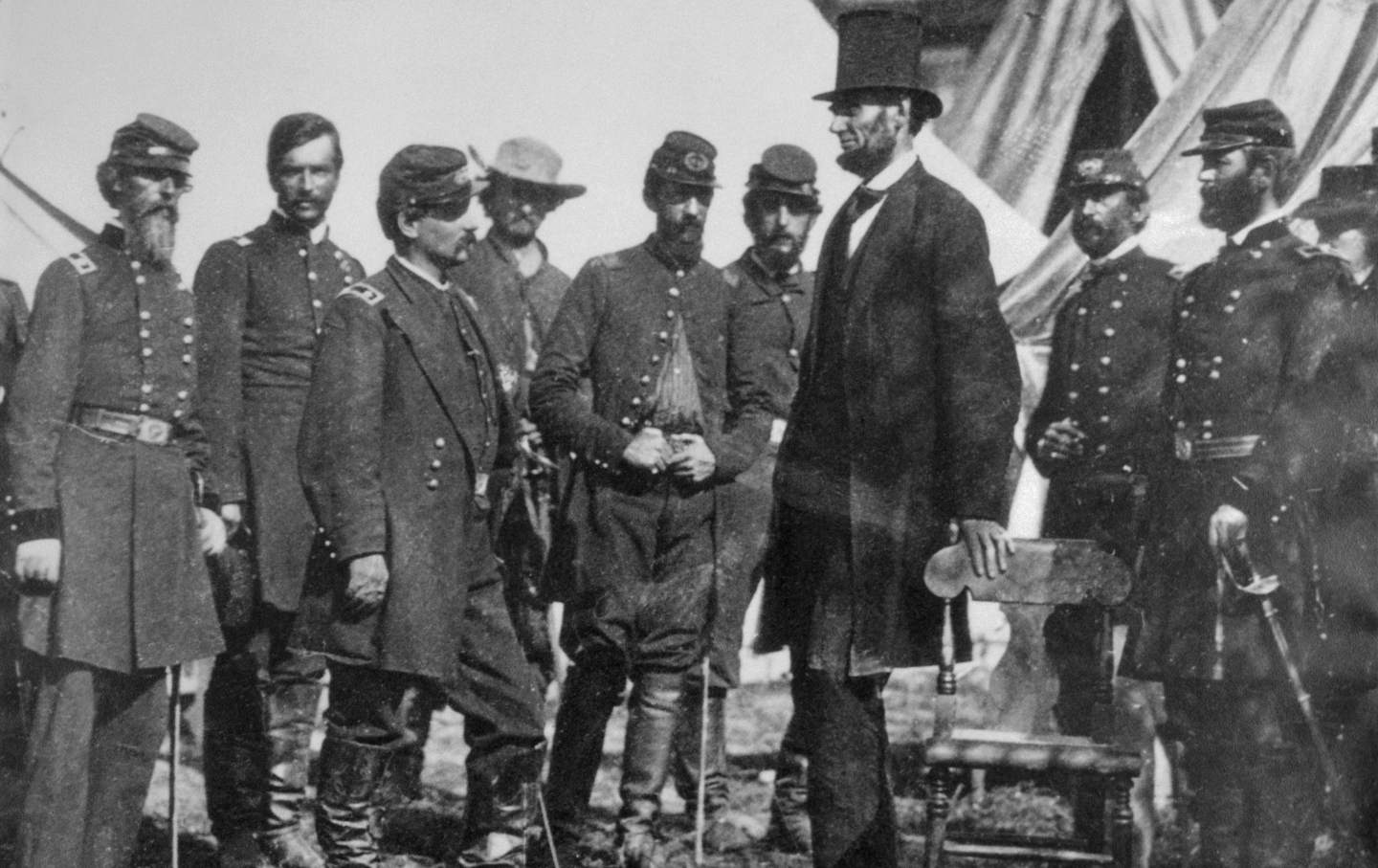
Civil War Isn't on the Horizon—the Original Battle Never Ended | The Nation

One of the most common arguments centered on history and tradition. Defenders of slavery frequently pointed out that slavery had existed for thousands of years. They noted that ancient civilizations such as Greece and Rome relied on enslaved labor and that slavery could also be found throughout Europe, Africa, Asia, and the Americas at various points in history.

Because slavery had been a part of human societies for so long, supporters questioned why it should suddenly be abolished. To them, its long history was evidence that it was a normal and accepted institution.

Economic concerns formed another major part of the defense of slavery. Southern agriculture depended heavily on crops such as cotton, tobacco, rice, and sugar. These products generated enormous wealth for plantation owners and contributed significantly to the American economy. 

Supporters argued that enslaved labor made this agricultural system possible. They claimed that a sudden transition to free labor would disrupt production, harm businesses, and create economic uncertainty across the South. Many believed that eliminating slavery would threaten the prosperity upon which Southern society depended.

Defenders also stressed the difficulty of changing a long-established system. By the mid-nineteenth century, slavery had been embedded in the Southern economy and social structure for generations. Supporters argued that replacing it would not be simple and questioned whether the region could function effectively without it. Rather than focusing on the moral question of slavery, they emphasized the practical challenges that they believed would result from abolition.

Legal arguments were equally important. Defenders of slavery often pointed to the Constitution and other laws that recognized and protected slavery in certain circumstances and of course relgion. They argued that the nation's founders had allowed slavery to exist and that individual states had the right to determine their own policies regarding the institution. From this perspective, slavery was viewed not only as a social and economic system but also as one supported by existing law.

Another argument commonly made by slaveholders was paternalism. Supporters claimed that enslaved people benefited from the care provided by their owners, including food, clothing, shelter, and supervision. They often described the relationship as mutually beneficial and insisted that enslaved people were better off under this system than they would be living independently. Historians today recognize that such claims ignored the realities of forced labor, lack of freedom, and the physical and emotional suffering experienced by enslaved people.

Ultimately, the debate over slavery reflected a conflict between competing visions of society. While defenders emphasized tradition, economic stability, legal protections, and paternalistic ideas, abolitionists argued that human liberty and equality were fundamental rights. Examining these historical arguments provides insight into the attitudes and beliefs that shaped one of the most significant conflicts in American history like the civil war. 

This blog post was created with the assistance of artificial intelligence (AI). AI tools were used to help with research, drafting, and/or editing. 

Sunday, September 20, 2026

I thought about the presentations

In class when everyone was presenting their information from the past, I was taking it back a lot because I was surprised how much information I didn't know. I did know a little bit about some of the information that was presented like how the slave trade worked I did have a understanding of that. Also, I did know a little bit about John Brown and what he stood for during his time in the 1800s.

But of course to learn something new every day. Like I said before I knew some things about John Brown but I didn't know everything and I still learned a lot from the presentations. Also if I'm being honest, personally, John Brown was my favorite part of all the information that was given that day. 

What I learned from the presentations was, he was born in Connecticut and was raised in a strict anti-slavery household. I knew he was against slavery, but I didn't know how his family was to slavery. I learned of his actions in this presentation too how he became involved in a violent conflict in Kansas during 1855. 

I guess the reason why this is my favorite part of the presentation is because one I knew a little bit about the topic into John Brown, as a person has a very long lasting legacy that stood out to me because it's hard to create a legacy that lasts that long, and his actions really sparked anti-slavery move mince throughout the country after his execution by the country.

Speaking of his execution, that's another thing I didn't know about him. I originally thought he would've died from old age, but no, he died from his actions, even though his actions were for the better of the country. 

I have to say his actions that I learned about very noble, trying to start an uprising in Virginia for the slaves, of course, with the help of 21 other men. After learning how he was execute, I wish you could've seen what the country would've become without slavery.

Of course, I did enjoy the other topics that were brought up in the presentations like the Civil War, the start of women's rights, the battle fought, Missouri joined the union, talking about Abraham Lincoln a little bit, how some of the enslave people got to go back home etc. But I think the most important in the most impactful out of all the topics is of course the Civil War. Because let's face the facts this was quite the turning point for the country.

Civil War really brought to light the evil atrocities that our country was doing. Of course I can't forget about all of the death in his destruction the Civil War caused. But luckily, after the war, the country saw what he was doing wrong and changed for the better.

I think everyone did a great job on what they presented but the Civil War I think they did an outstanding job. The way they worded it, how they organized it, and how they present all of it was very inspiring, and has taught me a thing or two on how to present better funny enough. The only thing I think they could of done better is add a bit more color and pizzazz to their slides. After they finished everything in their topics, I realized it was just a lot of paragraphs and bullet points, if they had more pictures or gave it some effects that would've made it perfect in the end. 

_____________________________________________________________________________________

AI Disclosure: AI was not used in anyway during the creation of the blog post 

William Wilberforce Highlights

William Wilberforce - Wikipedia

Many people throughout history have fought to make the world a better place. One of the most important figures in the fight against slavery was William Wilberforce, a British politician and abolitionist who dedicated much of his life to ending the transatlantic slave trade.

William Wilberforce was born in England in 1759. He entered Parliament at the age of 21 and quickly became involved in politics. Although he came from a wealthy background, his life changed when he learned more about the cruel realities of slavery and the slave trade.

During the eighteenth century, millions of Africans were captured and transported across the Atlantic Ocean to work as enslaved laborers. The journey was often deadly, and those who survived faced harsh and inhumane treatment. The slave trade generated large profits for many British merchants, making it difficult to challenge.

After experiencing a religious conversion in the 1780s, Wilberforce became committed to improving society and helping those who suffered injustice. He began working with abolitionists, including Thomas Clarkson, who had gathered evidence about the terrible conditions endured by enslaved people. Together, they sought to persuade both the public and Parliament that the slave trade should end.

One of Wilberforce's greatest strengths was his persistence. In 1789, he delivered an important speech to Parliament explaining why the slave trade was morally wrong. Over the next two decades, he repeatedly introduced bills and argued in favor of abolition. Many politicians opposed his efforts because they believed slavery was necessary for Britain's economy.

Wilberforce's Determination  

Despite these setbacks, Wilberforce refused to give up. Year after year, he continued campaigning against the slave trade. His determination inspired many others to support the abolitionist movement. Public opinion gradually began to change as more people learned about the suffering caused by slavery. 

After nearly twenty years of effort, a major victory finally came in 1807. Parliament passed the Slave Trade Act, making it illegal for Britain to participate in the transatlantic slave trade. This was a historic achievement and a significant step toward ending slavery.

However, Wilberforce understood that the fight was not over. Although the slave trade had been abolished, slavery still existed throughout much of the British Empire. He continued supporting campaigns aimed at ending slavery completely.

Later in his Life 

In his later years, Wilberforce witnessed growing support for full emancipation. Just before his death in 1833, he learned that Parliament was preparing legislation to abolish slavery across most of the British Empire. This law, known as the Slavery Abolition Act 1833, was passed shortly afterward.

Today, William Wilberforce is remembered for his determination, courage, and commitment to justice. His efforts helped change British society and demonstrated how one individual can help bring about meaningful change. His story remains an important example of perseverance and the fight for human rights.


_____________________________________________________________________________________

AI Disclosure: This article was written with the assistance of artificial intelligence (AI). AI tools were used to support research.

Reaction about today's class

Today during everyone's presentations I learned a lot about the time frame. What a normal day looked like in the 1800s, and the discrimi...