Through the history and documentation of many religions, we can see that their views on slavery differ, and also fluctuate throughout time. The question here, however, is what differences and arguments are there throughout all these religions in the aspect of pro versus anti slavery. This question is rich with answers on both sides across numerous religions.

Arguments Against Slavery
For most of the Old Testament, the Bible doesn’t exactly say that slavery is right, but it acknowledges that it was a sort of “Social Construct” at the time that was widely used and accepted. Specific religions, like Judaism, for a time in its early days, condoned slavery as a normal practice, especially the enslavement of non-Isrealites.
However, as time went on, they started to legalize certain forms of slavery that they deemed were against Judaism or Christian beliefs. After more time passed, they eventually put the illegalization of slavery in full effect with little to no exceptions. So the argument here would be that at the start, most religions were all for slavery, until they realized it went against exactly what they preached, so they decided to crack down on it.
One big part of the Bible that details this is the book of Exodus, especially verse 21:2. This verse details one of the laws put into place about servitude, that you can have someone serve you for six years, but on the seventh, they MUST let you go free. This is mostly because in Judaism, “slavery” leaned more towards indentured servitude, meaning they would go free after serving a certain stretch of time.
One other place in the Bible is Galatians 5:1, which helps reinforce how slavery was a lot less harsh and less practiced as it was in the Old Testament. The verse says, “It is for freedom that Christ has set us free. Stand firm, then, and do not let yourselves be burdened again by the yoke of slavery.” (Galatians 5:1 NIV). This is showing the belief that no man should ever have to serve permanently or, more specifically, from birth or a very young age, until death, whether that be from old age or from being worked to death.
So in biblical times slavery was never fully illegal per se; however, especially in the New Testament, it mentions that it was very inhumane and was effected majorly by these new rules, making it a lot better. While, of course, slavery was never intrinsically good, this new form of servitude did serve as a big argument against harsh slavery.
This was also reflected in more modern times during the abolition of slavery, when the government had to make a number of exceptions to get people to finally agree with the new laws, even if that meant still leaving a major amount of injustice on society.
Arguments for pro slavery
The Bible says that slavery is permitted in the old world. For example in the old world Moses comes up a bit when discussing this topic. According to Moses's law Hebrew servants were allowed to work for 6 years to repay any and all of their debts but in the seventh year they were supposed to be set free.
But they had to be released after their six years were up, no expectations unless they had more debts. There are also quotes from Christianity that support slavery like, Leviticus 25:39–40 says these “slaves” were to be treated as “a hired man, as if he were a sojourner.” Verse 43 says, “You shall not rule over him with severity.”
From what I can tell so far Christianity did not use slavery the same way as people from the 1800s, instead they almost used it in a nicer way. But speaking about the 1800s the bible was actually used to fight for pro slavery in that time.
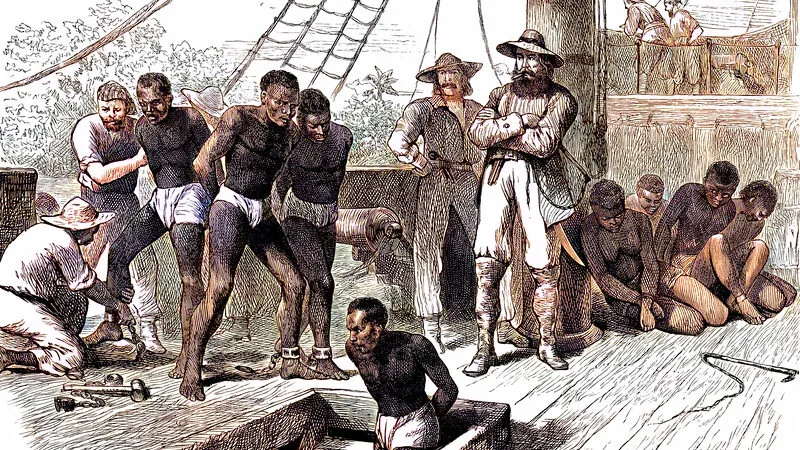
The Jewish religion says a similar thing about slavery, the religion says that slavery is ok to a certain extent. From what I can tell it is more seeing people as workers than as slaves, so like Christianity they use slavery in a nicer way than the 1800s stereotype we commonly use. In fact there is even a law in place that prevents them from making people slaves; “no Israelite is permitted to enslave a fellow Israelite who is indigent.” Website information
In the end you could say that the two religions I talked about earlier never really enforced slavery. The two religions were more in a weird gray area of sorts, not heavily supporting but then at again, they were not trying to ban or get rid of it in any means. So when you are comparing the 1800s to the old world, the time when the world was more heavily focused on religion, remember that they are different. Not different in the sense of calling it red vs blue but more of saying gray vs black, similar in some ways but at the end not the same.



No comments:
Post a Comment